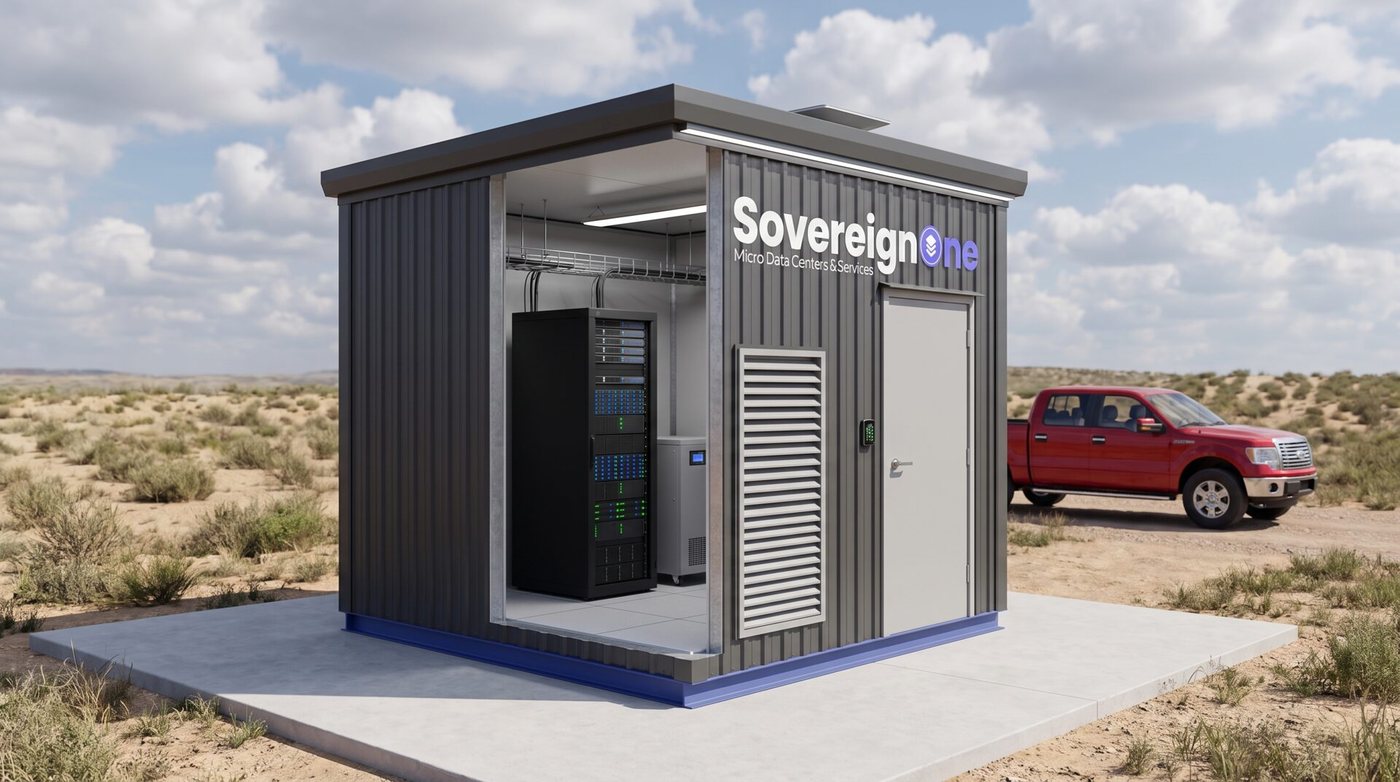
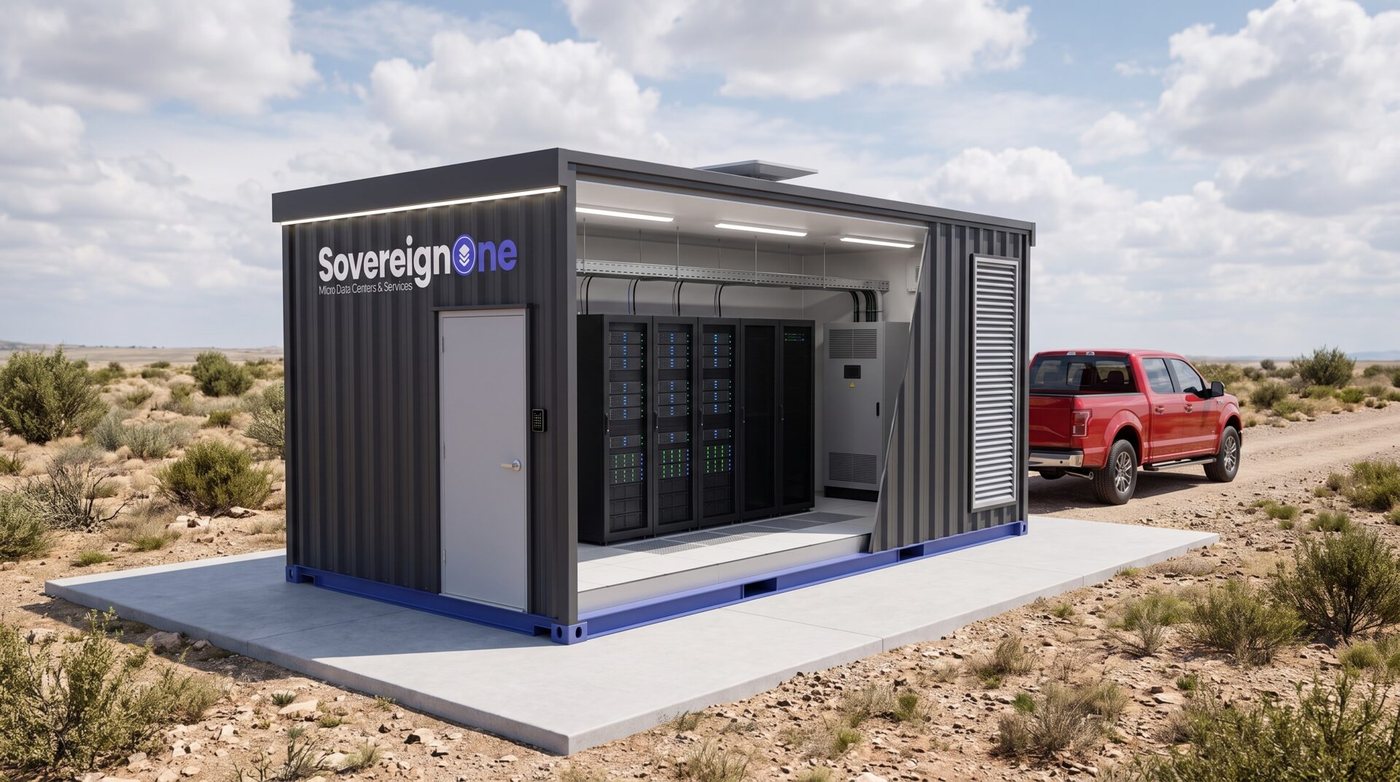
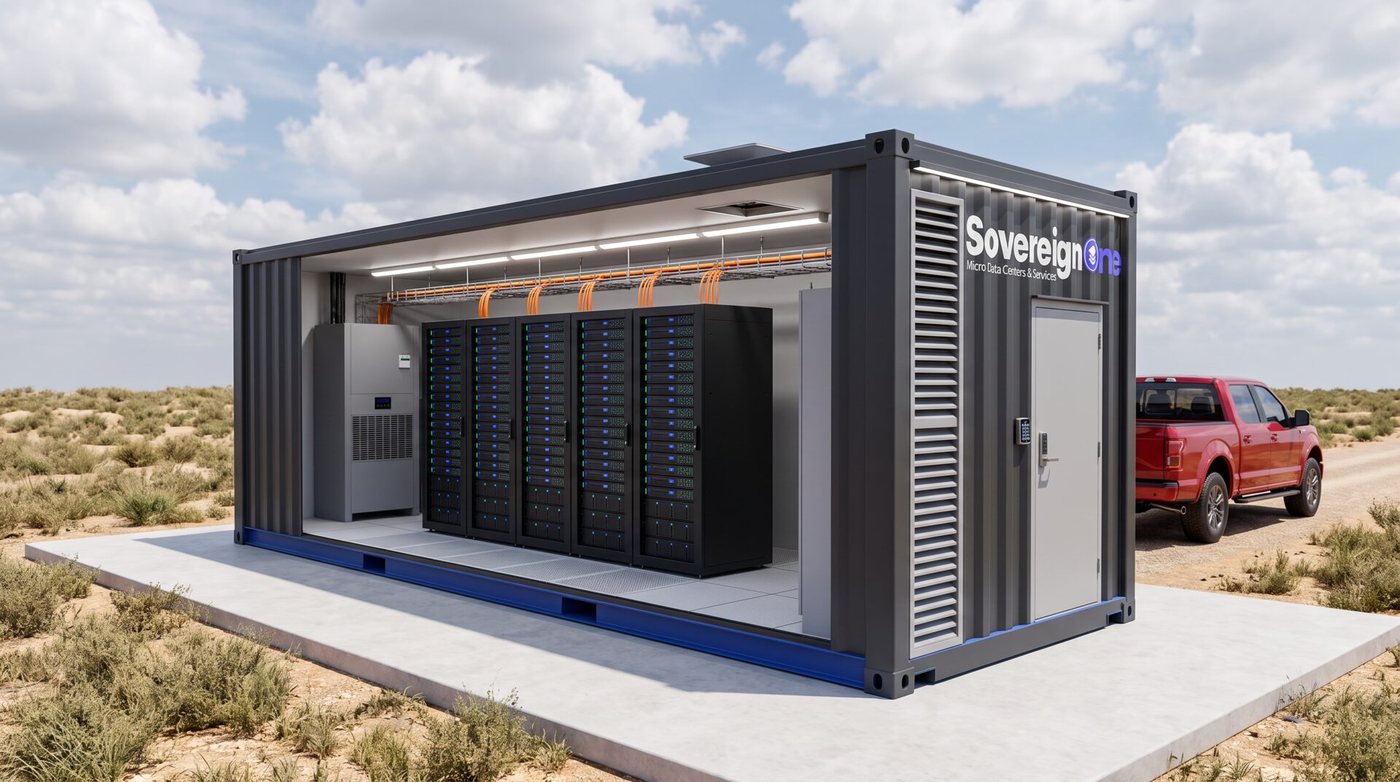
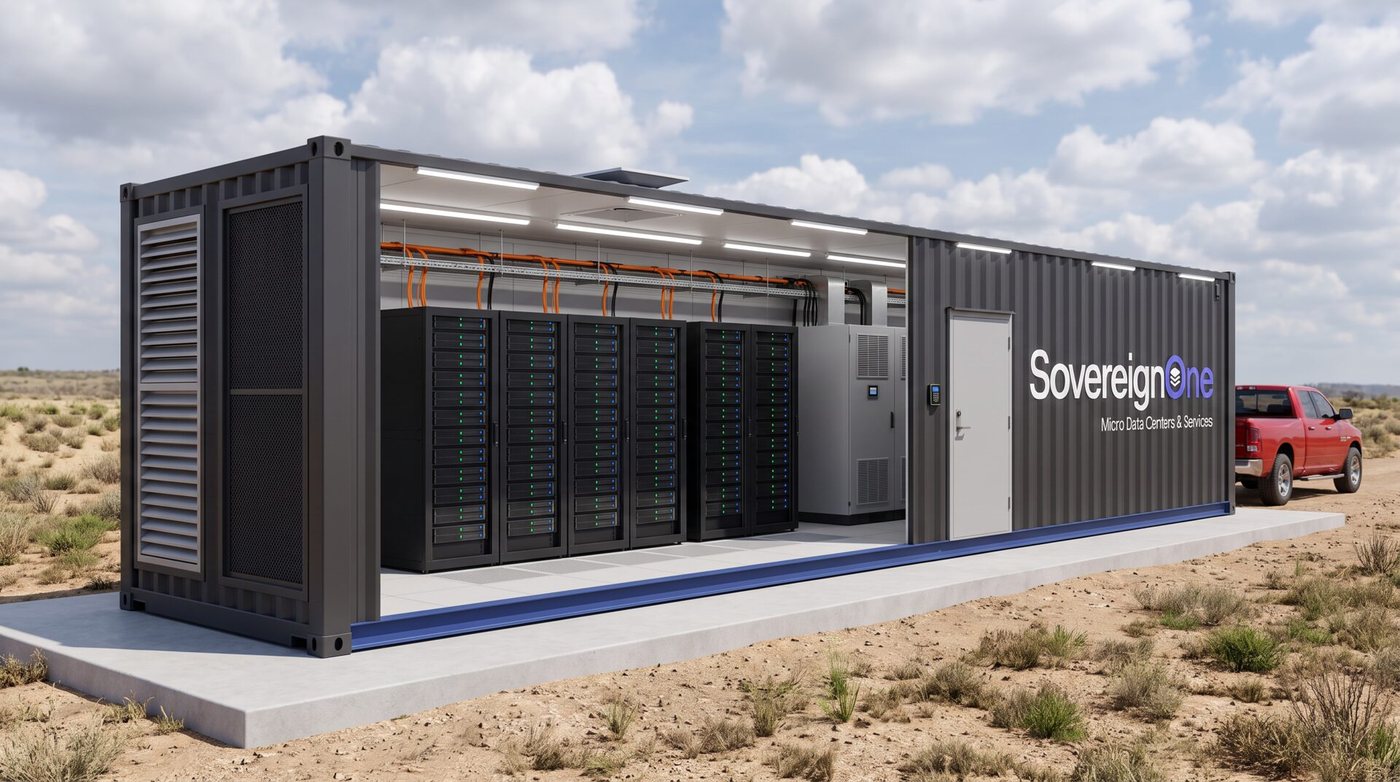
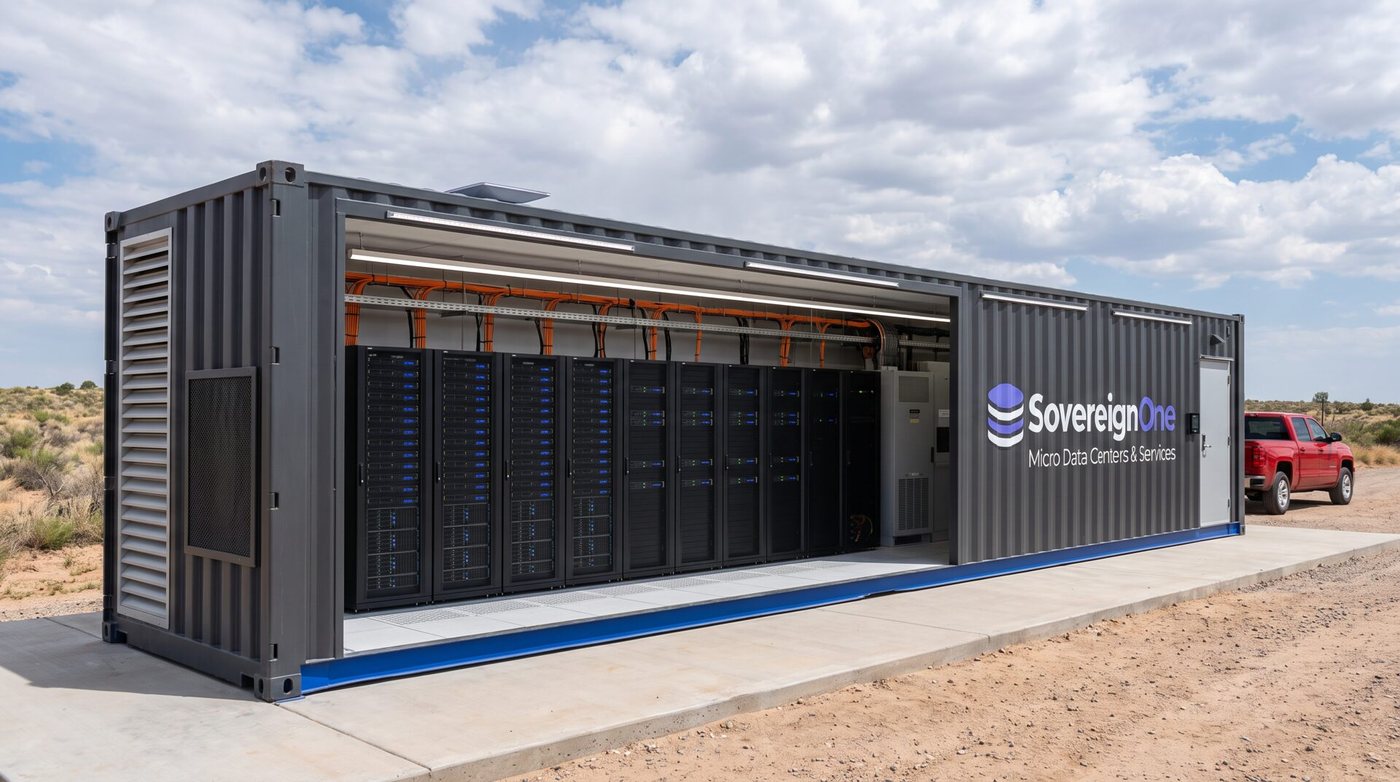
A modular data center container, delivered as a finished unit and commissioned on your site — on the power you already have. Every length shares the same cooling, power and security design; only the footprint changes.
Drawn to scale against one another. The difference between a 7 ft and a 52 ft unit is floor area and rack count, not a different product. Each modular data center container uses the same cooling, power and security design.
7' MDC
125 kW · 1 RACK
Single-cabinet edge deployments and constrained sites.
12' MDC
250 kW · 2 RACKS
Compact on-site capacity where floor space is tight.
20' MDC
500 kW · 5 RACKS
The standard footprint for on-premises and last-mile workloads.
40' MDC
1 MW · 10 RACKS
Production scale for AI and high-density compute.
52' MDC
1.25 MW · 14 RACKS
Maximum capacity per unit, for hyperscale at the edge.
Capacities shown are nominal per unit.
Inside the Unit
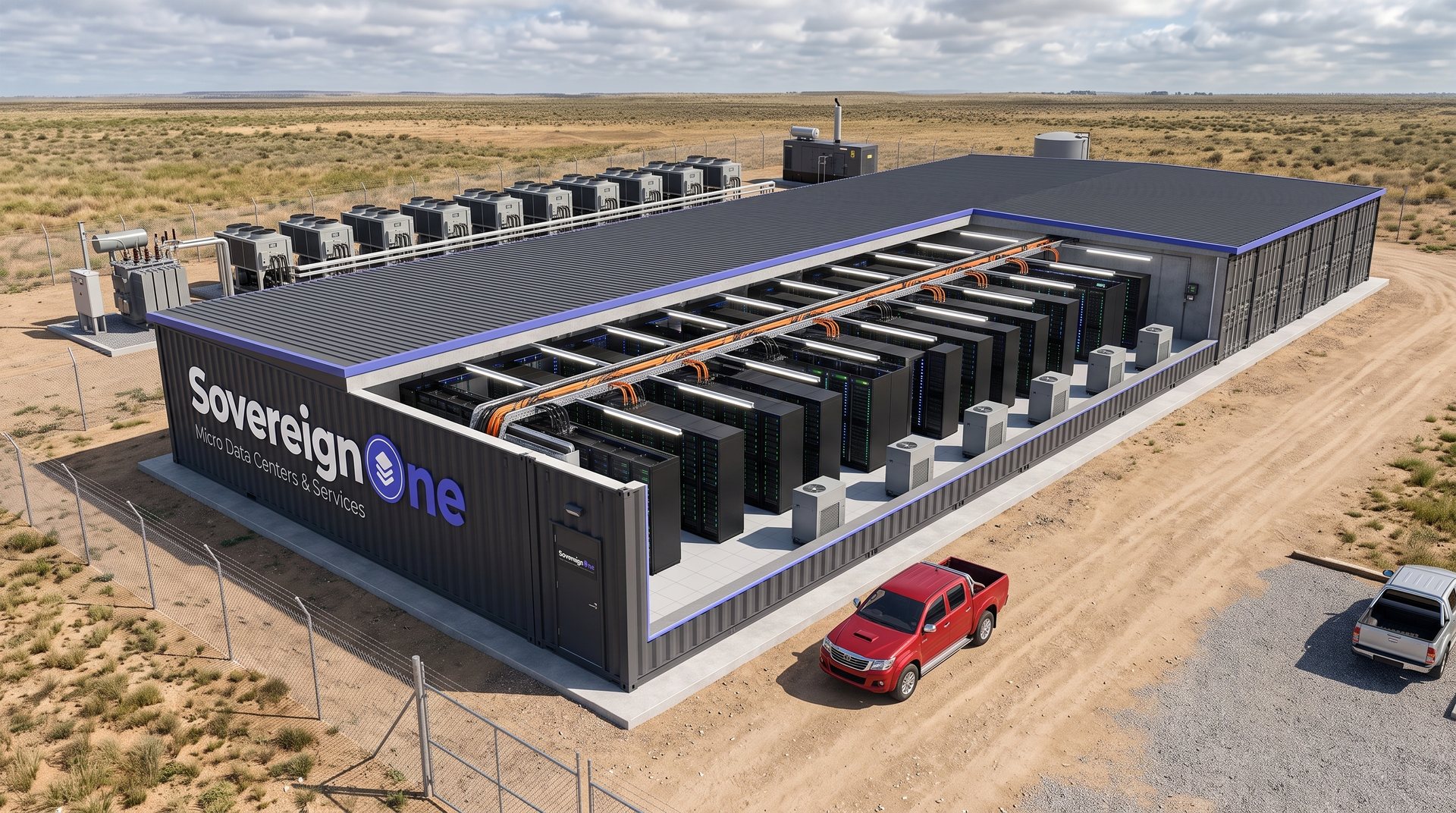
The same unit, with the wall taken off.
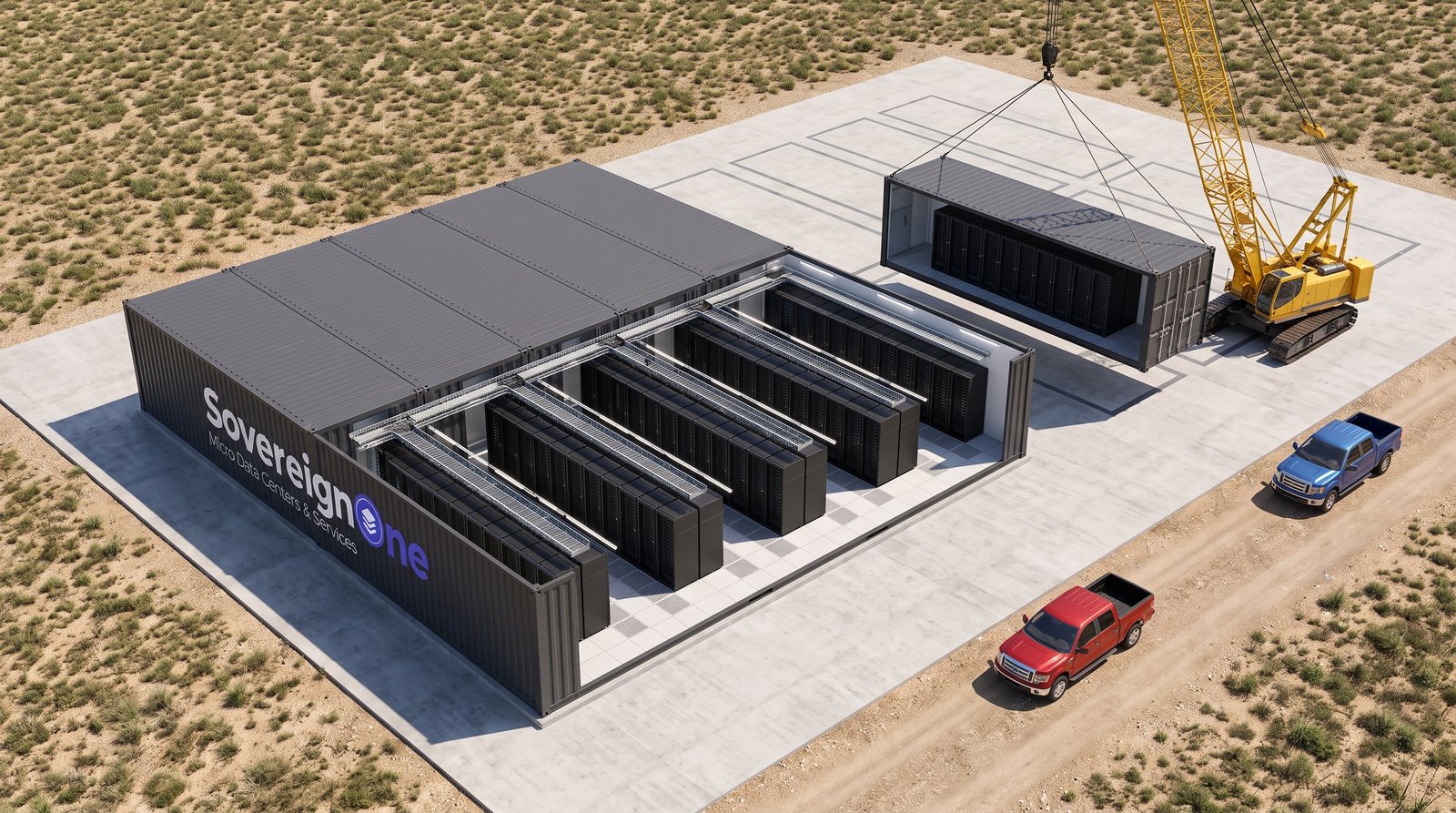
Modules arrive complete, are set on the pad, and join into one continuous white space. Nothing is built on site except the connections between them. Joined units behave as one modular data center container estate under a single operations model.
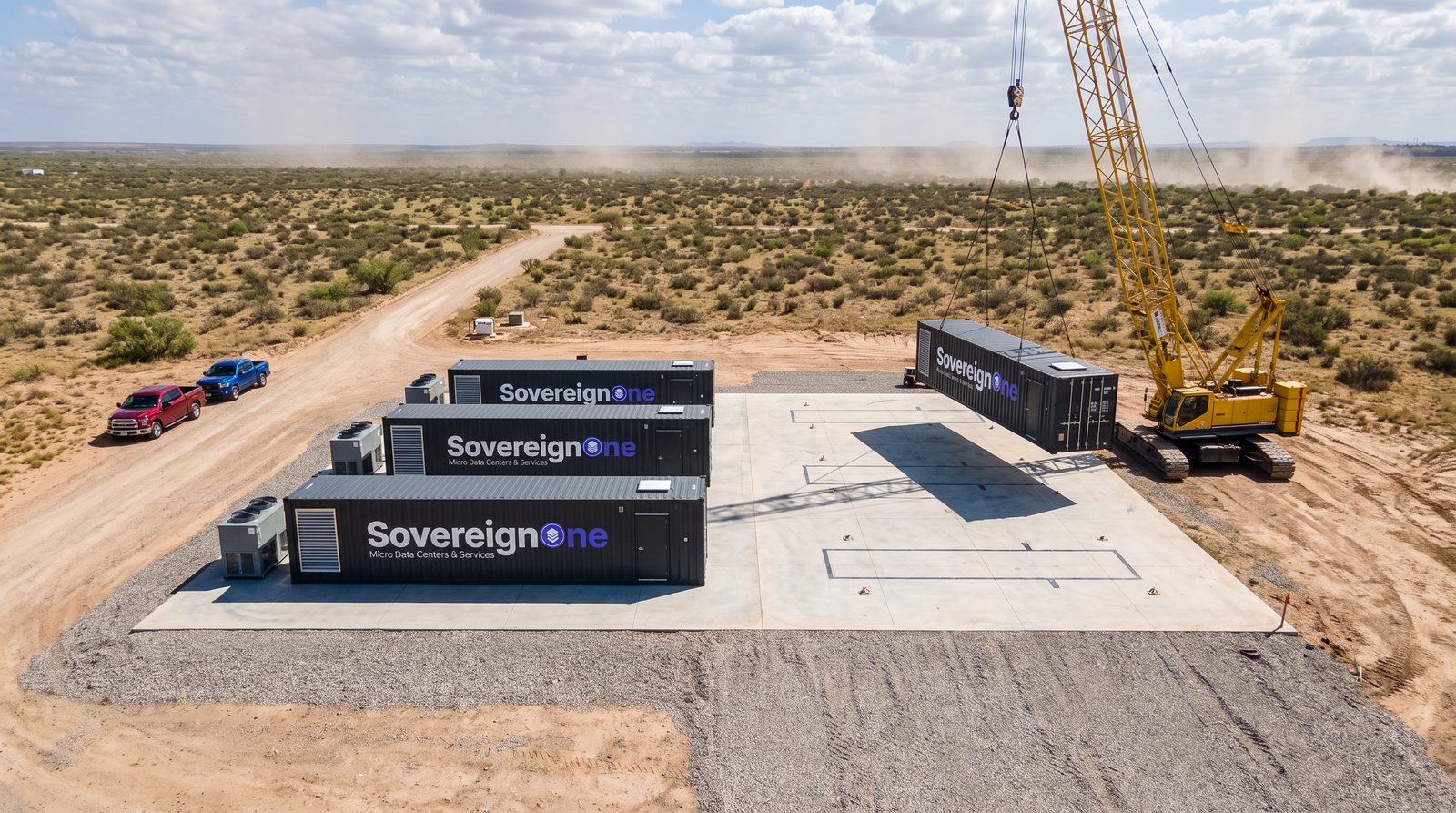
The last module goes in the same way as the first. Each one lands on the pad already fitted out.
Site work is a pad and a service tie-in. The marked positions are the rest of the build.
Contained aisles
Rack rows sit under overhead containment with the cable tray run above the aisle, so air and cabling stay separated end to end.
Cooling on the roofline
Heat rejection sits above and outside the white space, which keeps the floor area usable and service access outdoors.
Power at the edge of the pad
Transformer and generator sit clear of the hall, so the electrical tie-in is a site connection rather than an internal build.
Renders show the configuration under development. Rack counts, capacities and equipment selections are not implied.
How It Deploys
Four steps from site survey to live load.
01
Site survey
We confirm the pad, the power available at the boundary and the network hand-off.
02
Build and factory test
The unit is fitted out and tested as a complete system before it ships.
03
Delivery and set
It arrives on a trailer and is craned onto the pad in a single lift.
04
Commission to live load
Power and network are tied in, the unit is commissioned and handed over.
What arrives on site
A modular data center container arrives as a sealed, tested unit. Racks, cooling, power distribution, fire detection and physical security are installed and commissioned before delivery, so work on your site is limited to the pad, the power tie-in and the network drop.
The five lengths cover a wide range of deployments without changing the underlying design. A 7 ft unit carries a single rack at a nominal 125 kW for constrained sites and edge locations. A 12 ft unit carries two racks at 250 kW. A 20 ft unit carries five racks at 500 kW, the common choice for on-premises and last-mile workloads. A 40 ft unit carries ten racks at 1 MW for production AI and high-density compute. A 52 ft unit carries fourteen racks at 1.25 MW, the maximum capacity per unit.
Because every length shares the same cooling, power and security architecture, units can be combined. Modules are set on the pad and joined into one continuous white space, and the result is operated as a single estate rather than a collection of separate enclosures.
Siting a modular data center container is usually a question of power and ground rather than construction. The unit runs on the power you already have, and the cooling design reduces power and water used for cooling by 30% against a conventional air-cooled hall — often the factor that decides whether a site can host the load at all.
The architecture is the same across all five; the length determines rack count, from one rack at 125 kW in the 7′ to fourteen racks at 1.25 MW in the 52′. Power, cooling and control design carry across, so a decision made at one length still holds at the next.
Can I start small and expand later?
Yes. Units join side by side with the shared walls removed, turning a row of separate containers into one continuous room. A site that starts with one unit can grow into a larger hall without a second design and without a second procurement.
What happens before the unit reaches my site?
It is built and factory tested as a complete system. What arrives has already been proven to run, rather than arriving as parts to be assembled on site in the weather.
What are the steps from first contact to running compute?
Four: site survey, build and factory test, delivery and set, then commission to live load. Total time is four to six months, against two to five years for a conventional build.
What cooling do the units use?
Direct-to-chip liquid cooling, rear-door heat exchangers and immersion, plus JouleForce molecular beam cooling from Forced Physics — a conduction-based method that moves heat into air without water and without forced convection. Which combination a given unit uses depends on the rack density it has to carry.
Send us your load, site and timeline.
We will come back with the length that fits, what it needs from your site, and a delivery window.