Industries

Compute goes where the work is.

An edge data center puts capacity where the work happens. The same unit is specified differently for a mine, a hospital campus or a telecom aggregation site, but the architecture underneath does not change.

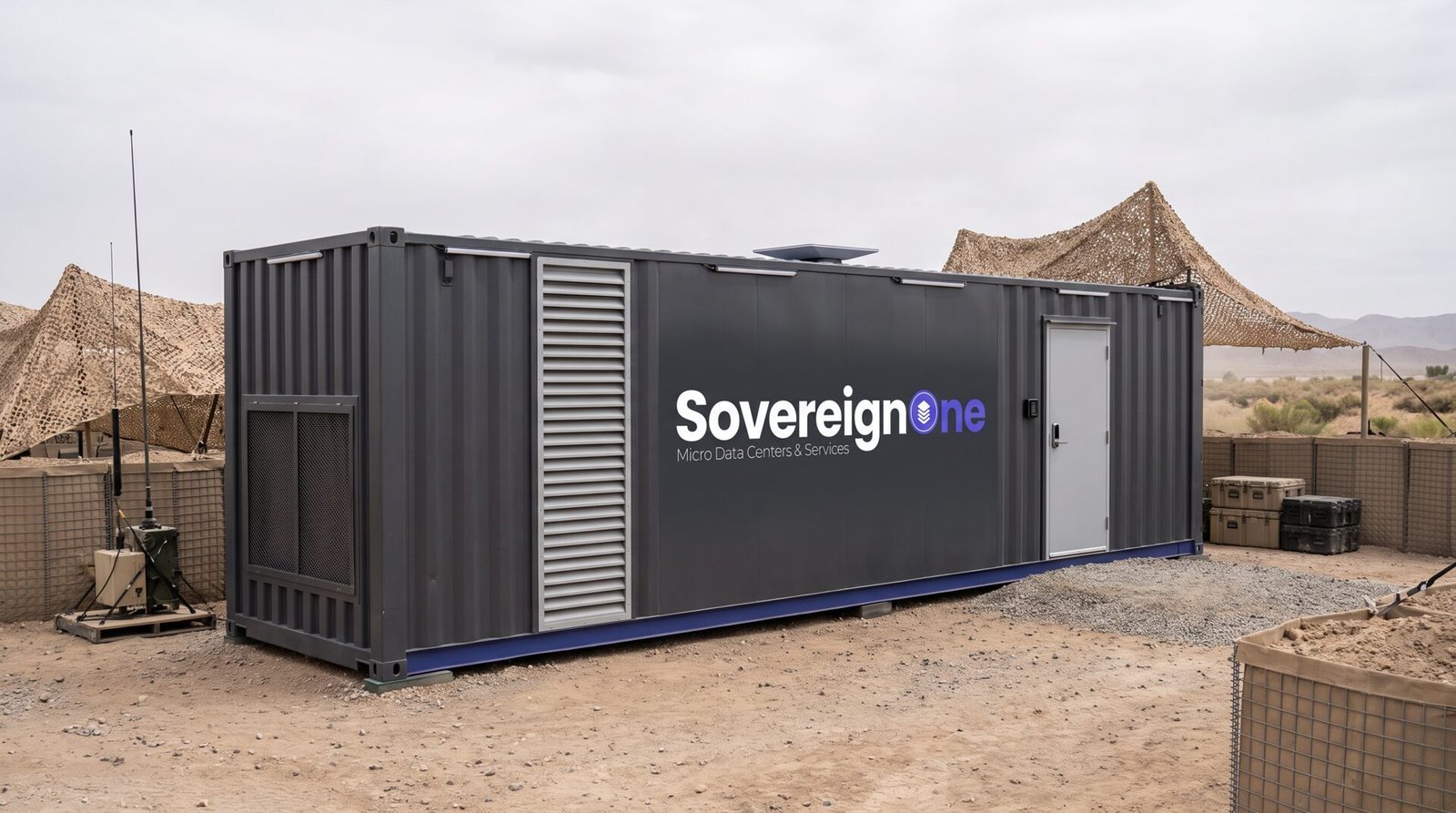
A SovereignOne modular data center at a forward operating site with antennas and protective barriers
01
Sovereignty and site access

Sovereign capacity in a transportable enclosure — delivered to the installation, not to someone else’s cloud region, and standing up in weeks rather…

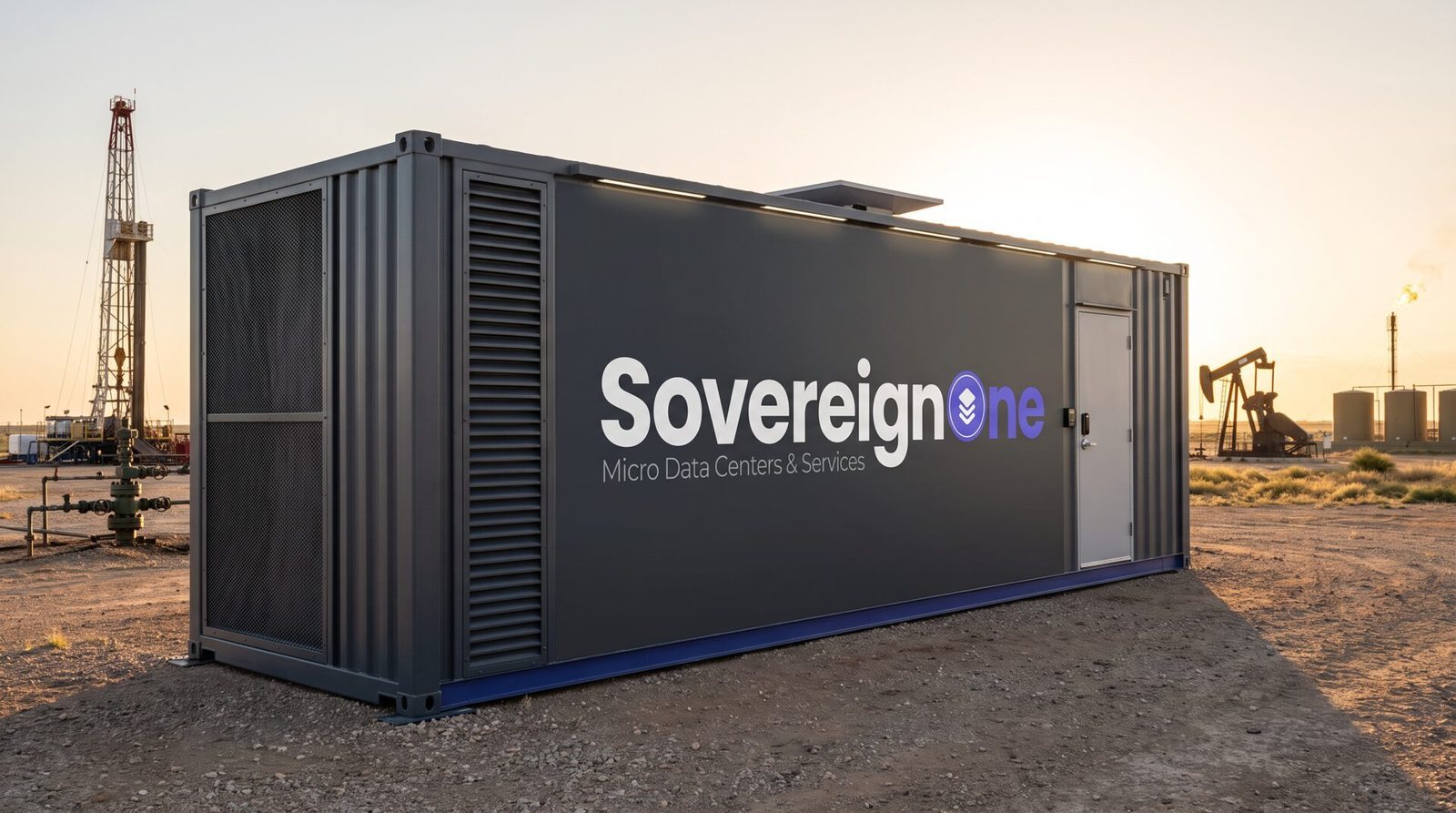
A SovereignOne modular data center on an oil and gas lease with a drilling rig and flare behind it
02
Remote sites, no grid

Seismic, telemetry and video are generated faster than any satellite or microwave link can carry them. Put the compute where the sensors are and move…

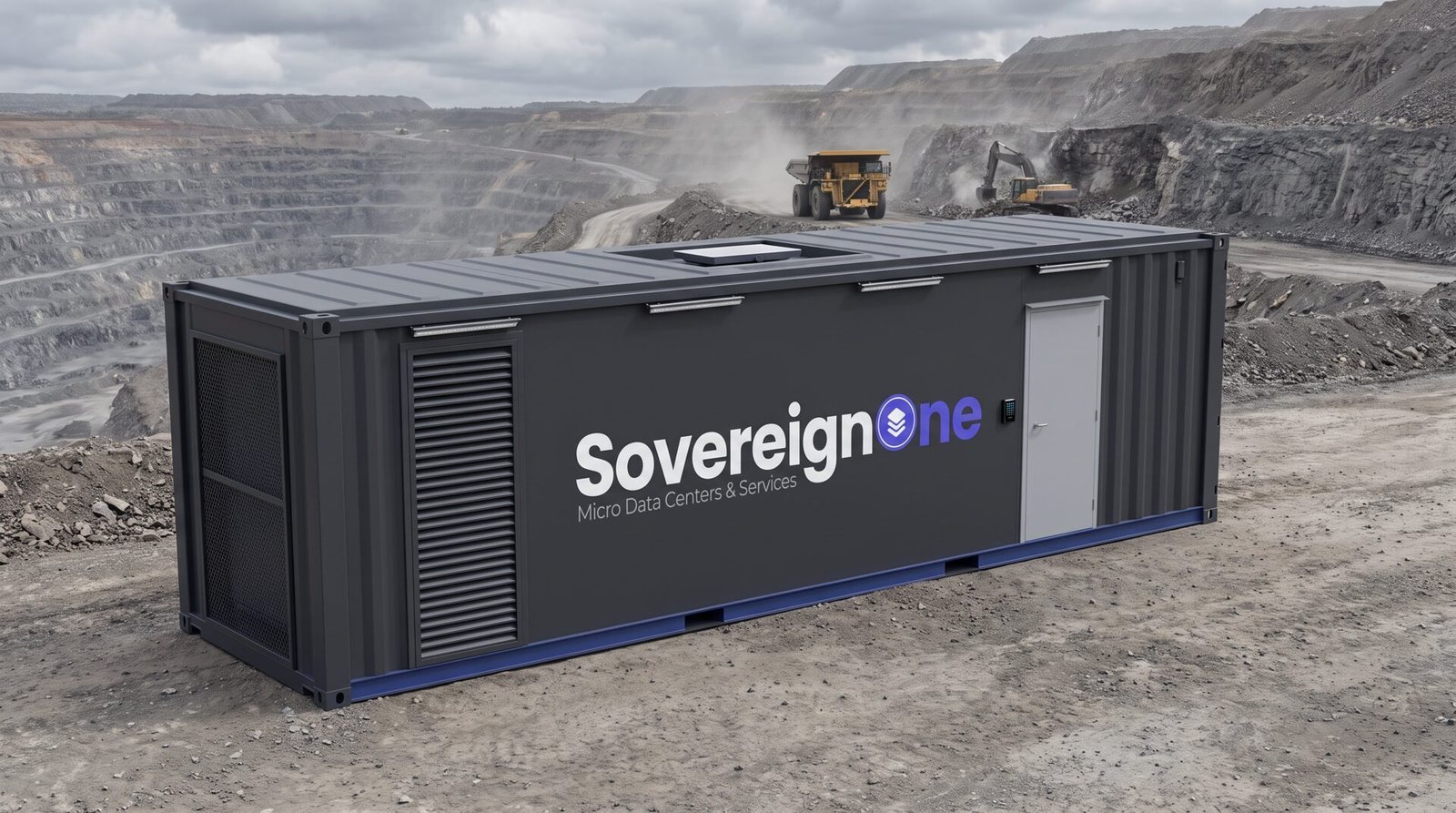
A SovereignOne modular data center on the rim of an open pit mine with a haul truck working below
03
No grid, moving footprint

Autonomous haulage, drill guidance and ore analysis all need answers in seconds, at sites that are usually hours from the nearest substation and that…

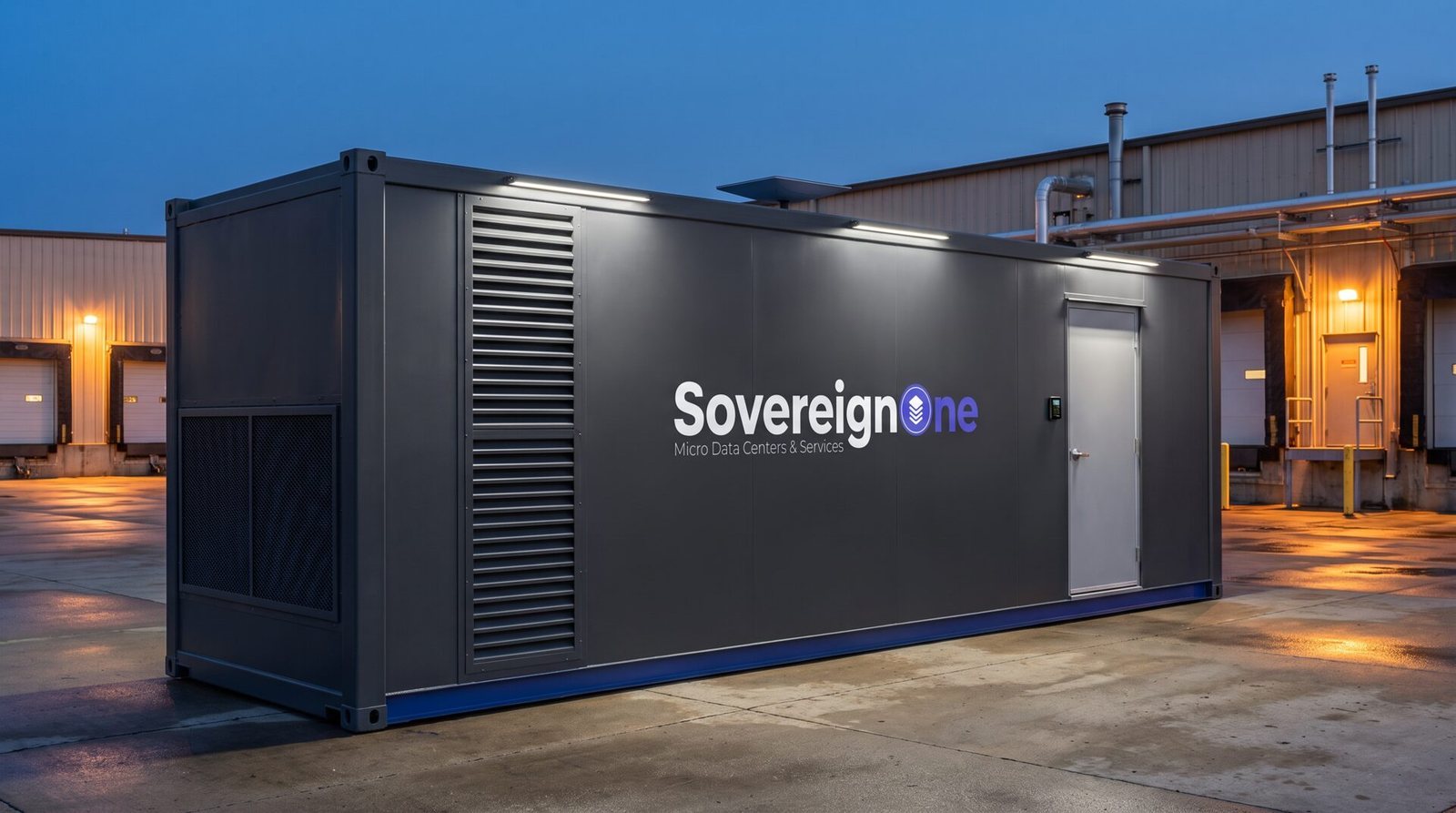
A SovereignOne modular data center beside a manufacturing plant loading dock at dusk
04
Latency to the line

Machine vision, predictive maintenance and quality inspection have to return a verdict before the part moves on. A cloud region is measured in tens…

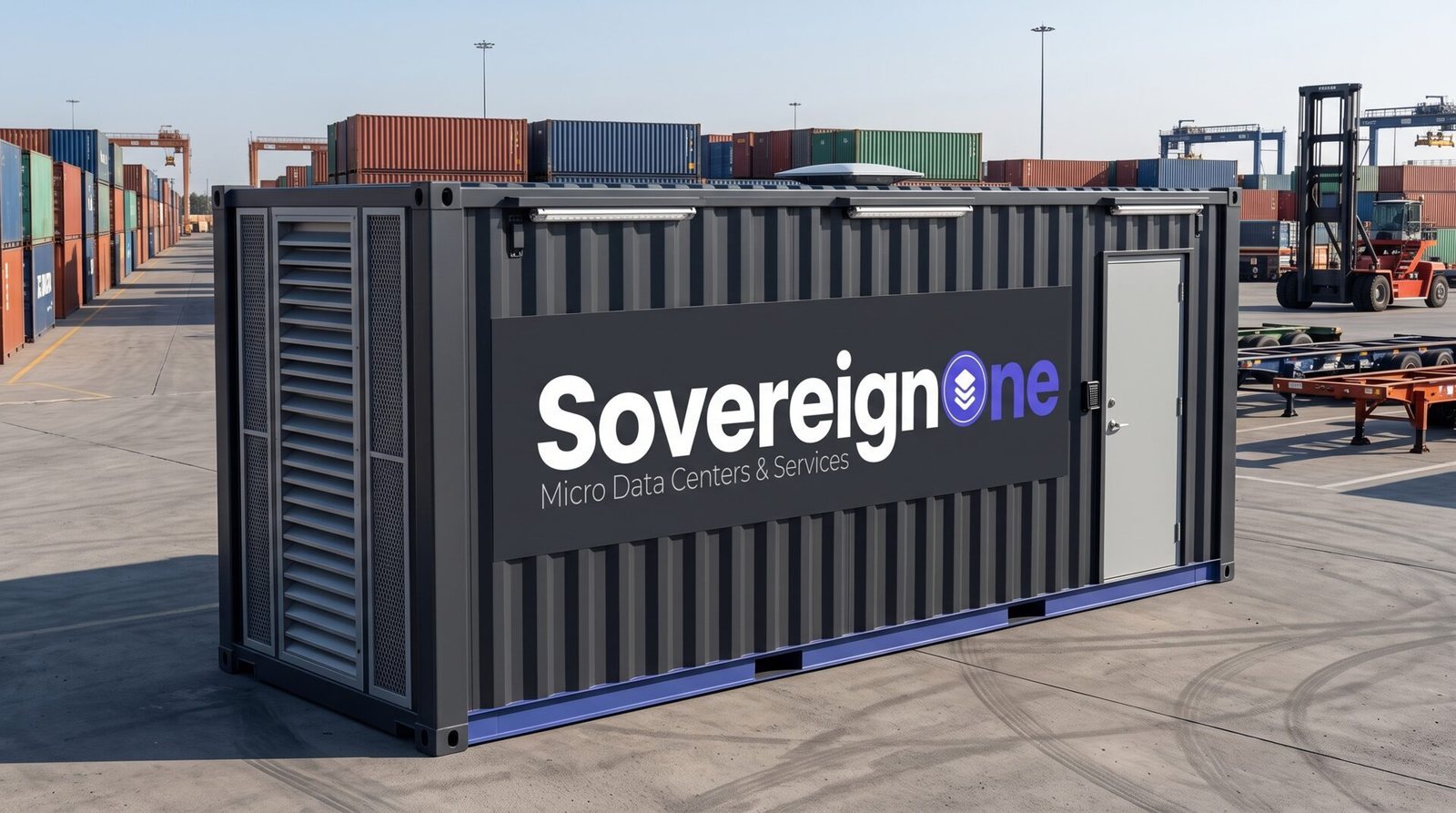
A SovereignOne modular data center in a container port terminal with stacked containers behind it
05
Yard size and automation

Container terminals, rail yards and cargo apron are enormous, sensor-dense and time-critical. The decisions they need are made in seconds, and the…

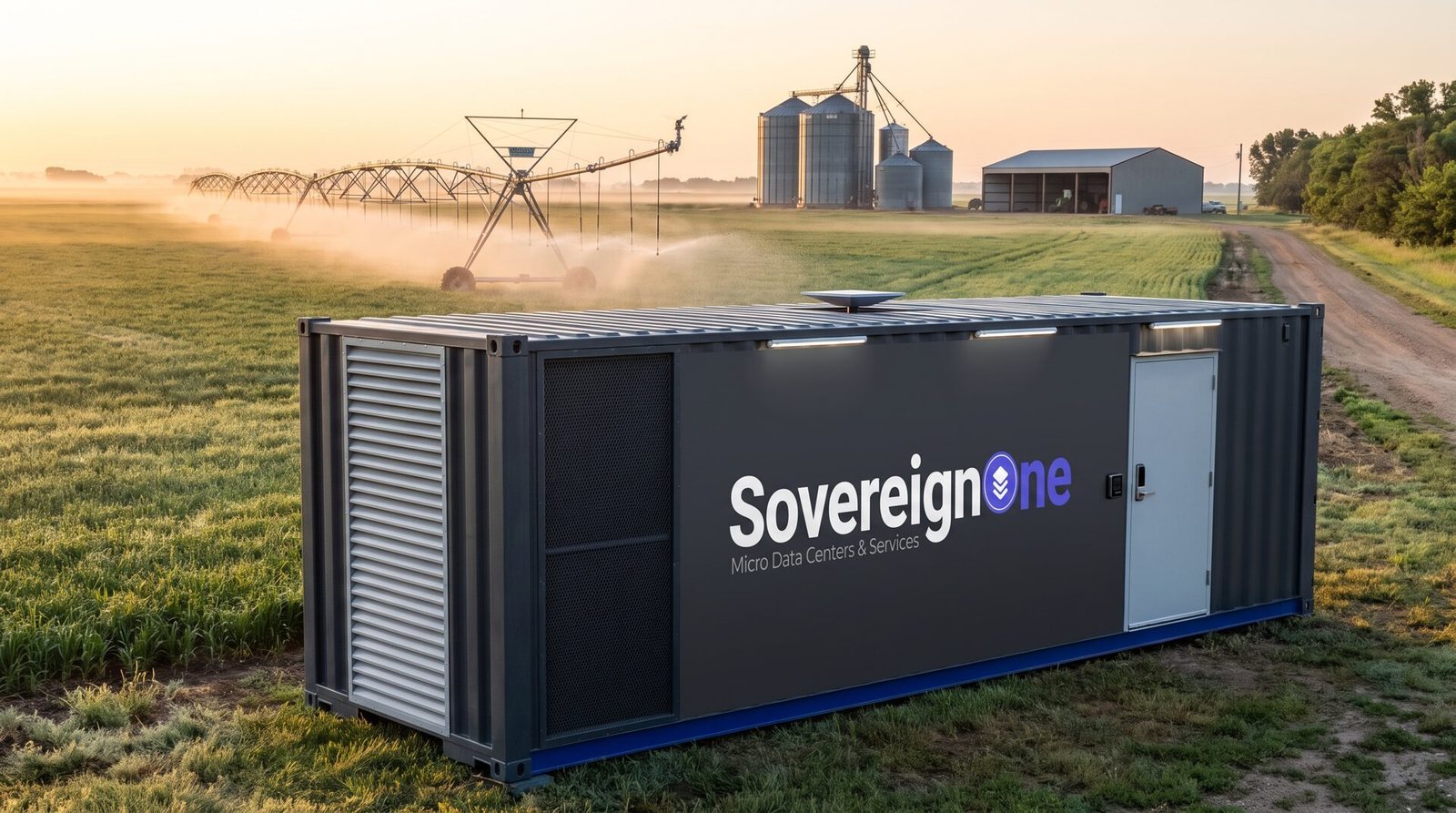
A SovereignOne modular data center beside an irrigated field at dawn with grain bins behind it
06
Connectivity and seasonality

Precision agriculture produces imagery and sensor data at a scale rural connectivity cannot carry. The processing has to happen where the crop…

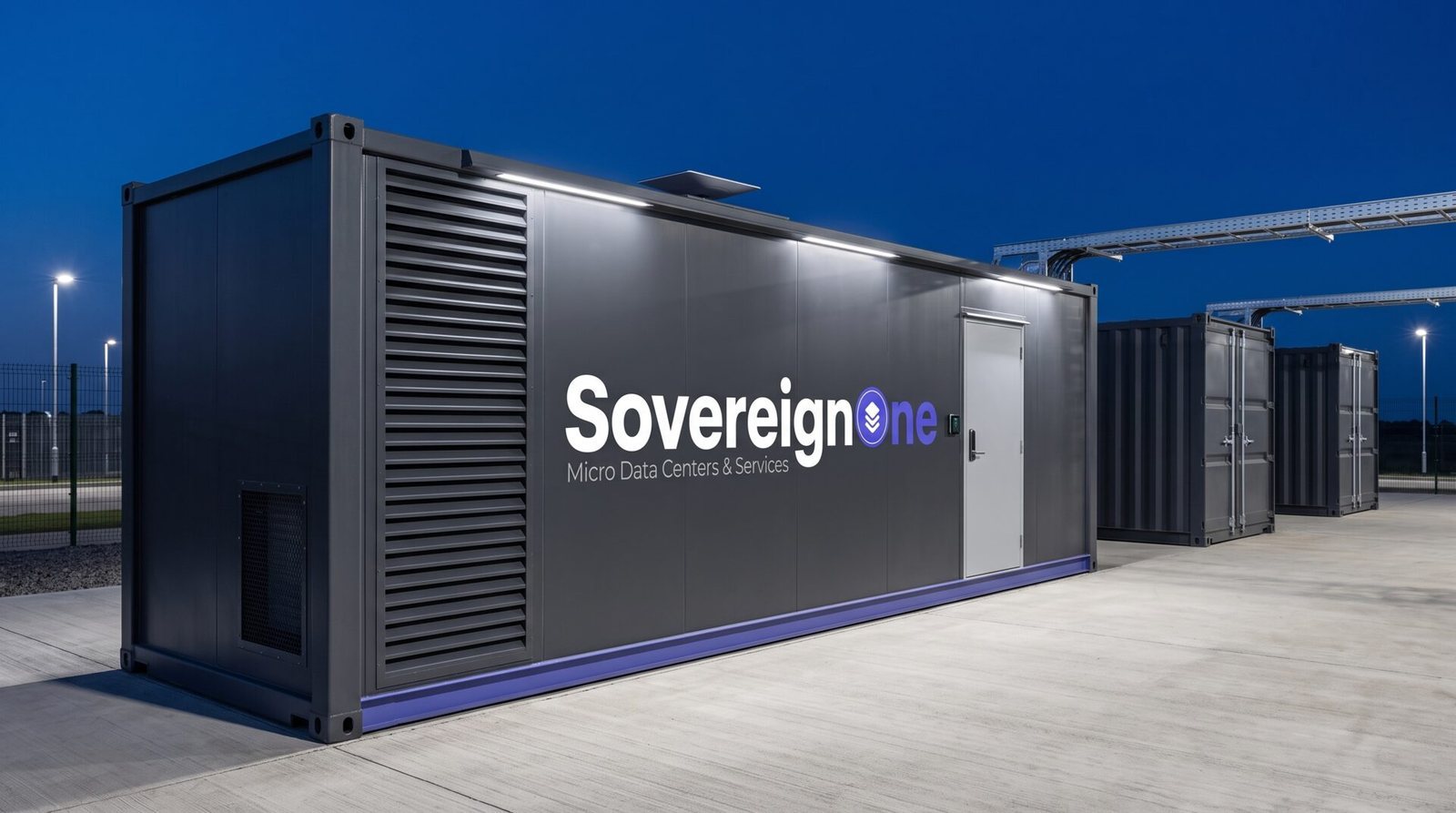
Several SovereignOne modular data centers in a secured compound at blue hour
07
Jurisdiction

Data residency is not satisfied by a region label. Sovereign capacity means known hardware, in a known building, operated by a named entity under one…

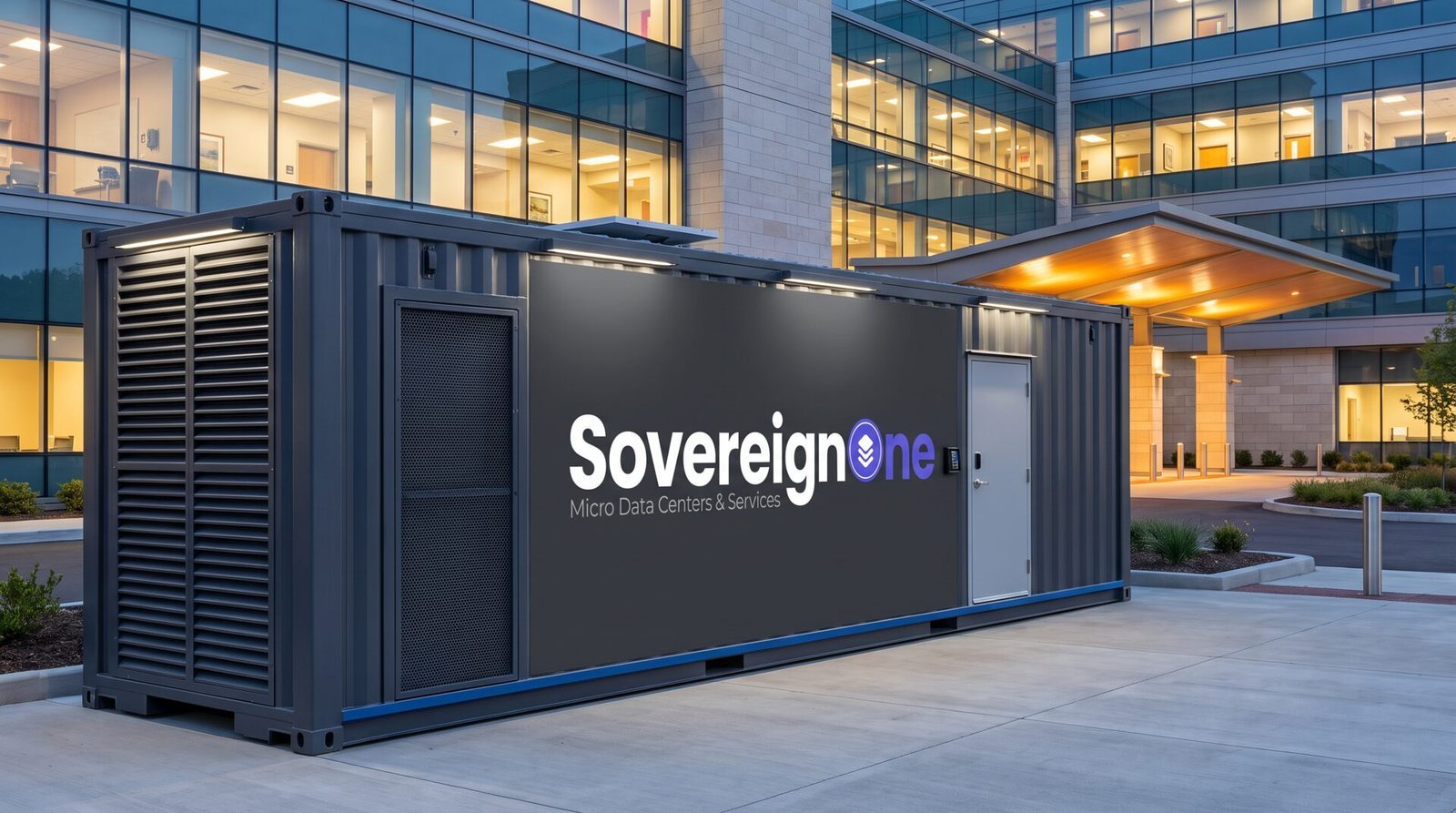
A SovereignOne modular data center on a hospital forecourt beside the main entrance canopy
08
Data that cannot leave

Imaging, diagnostics and the records behind them carry obligations that follow the data wherever it goes. The simplest way to meet them is for the…

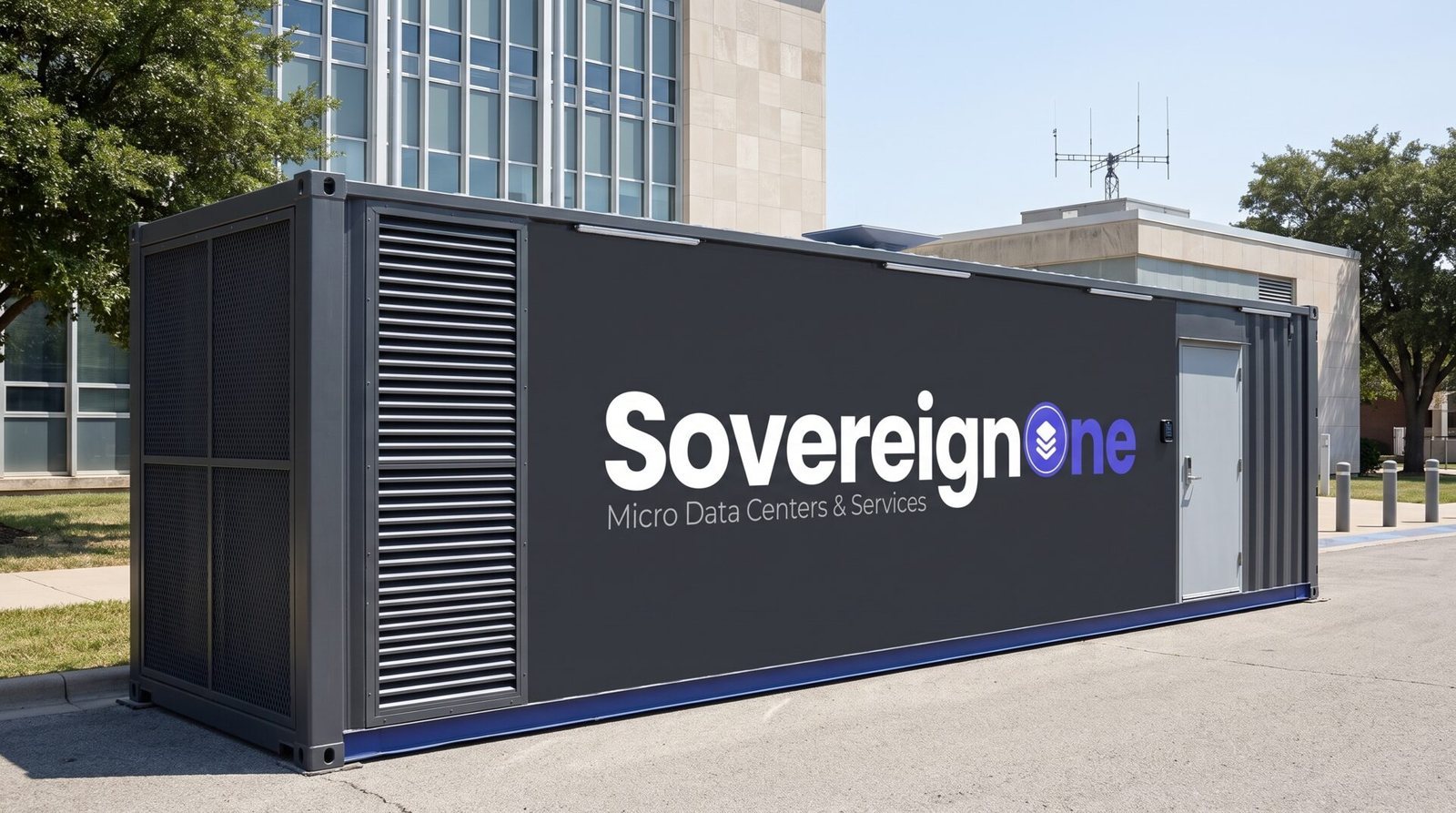
A SovereignOne modular data center outside a civic government building with rooftop antennas
09
Capital and permitting

Dispatch, records, body-worn video and permitting all need somewhere to run. A new building needs a bond measure, a site, and years. An enclosure…

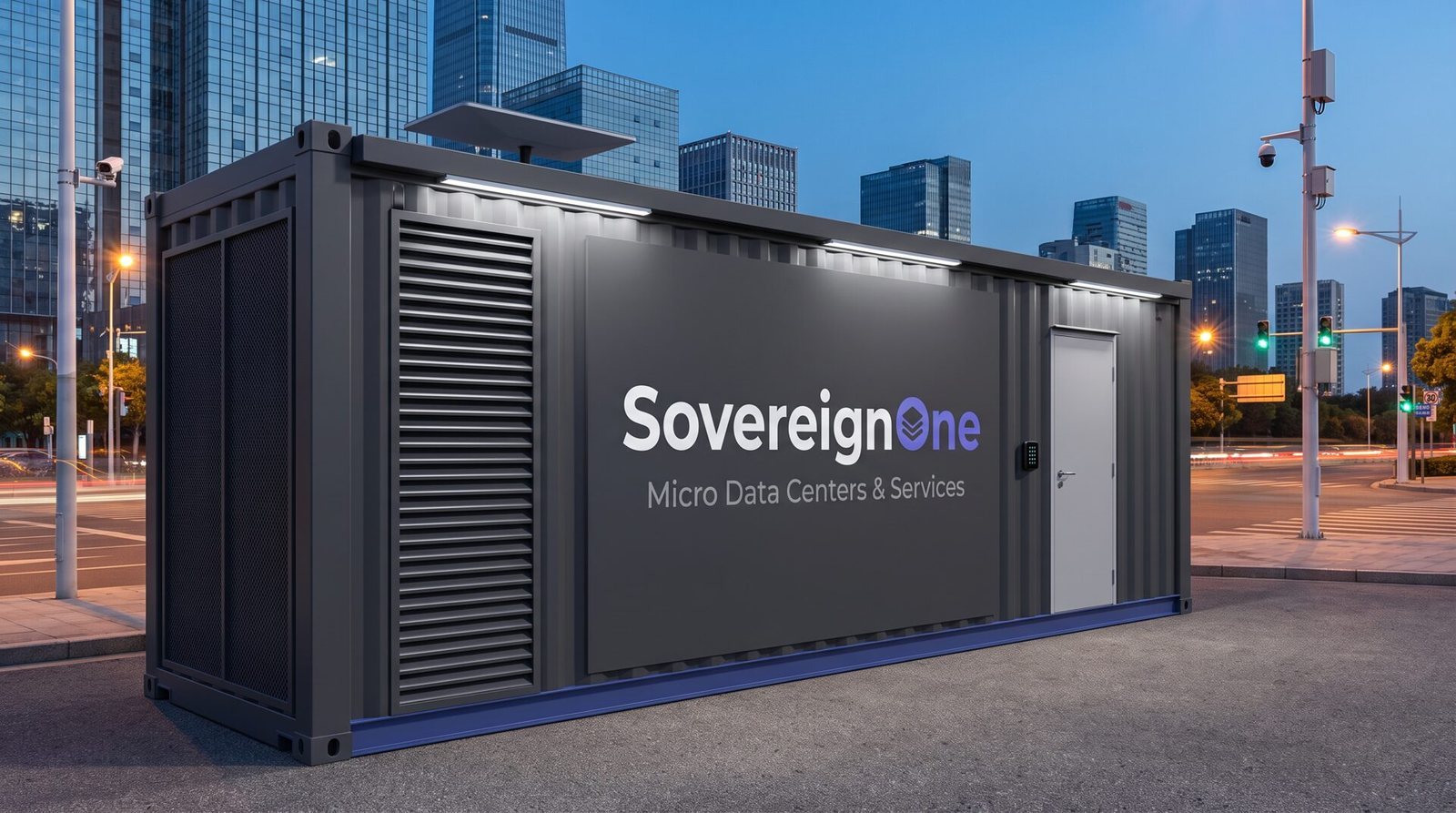
A SovereignOne modular data center on a city street corner at blue hour with traffic signals above it
10
Latency at the corridor

Signal control, transit priority and public-safety video all make decisions in milliseconds, at corridors where there is no room for a building and…

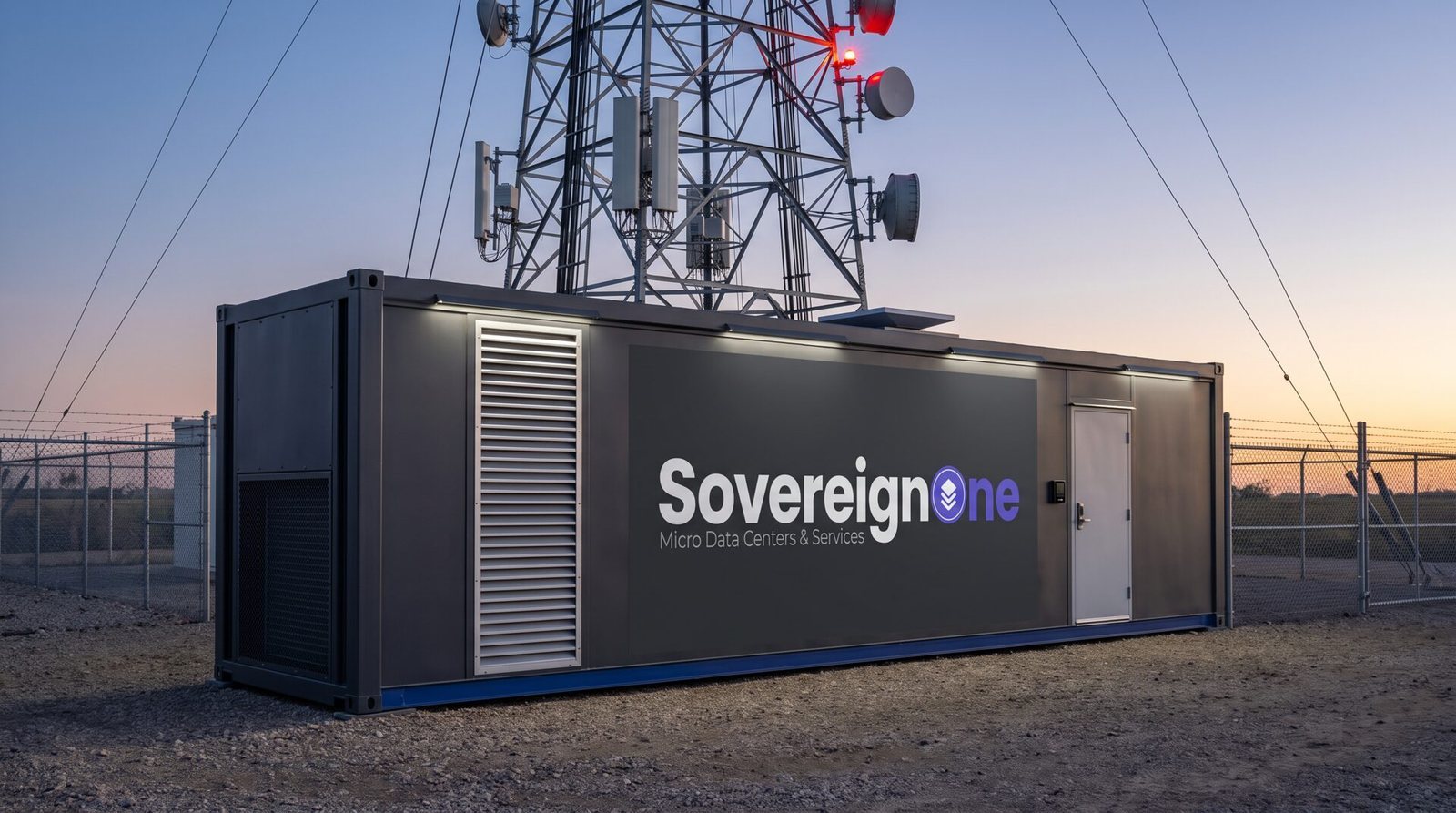
A SovereignOne modular data center in a fenced compound at the base of a cell tower
11
Distance to the user

Edge services only work if the compute is genuinely at the edge. Aggregation sites, hub offices and cell sites rarely have the room or the power for…

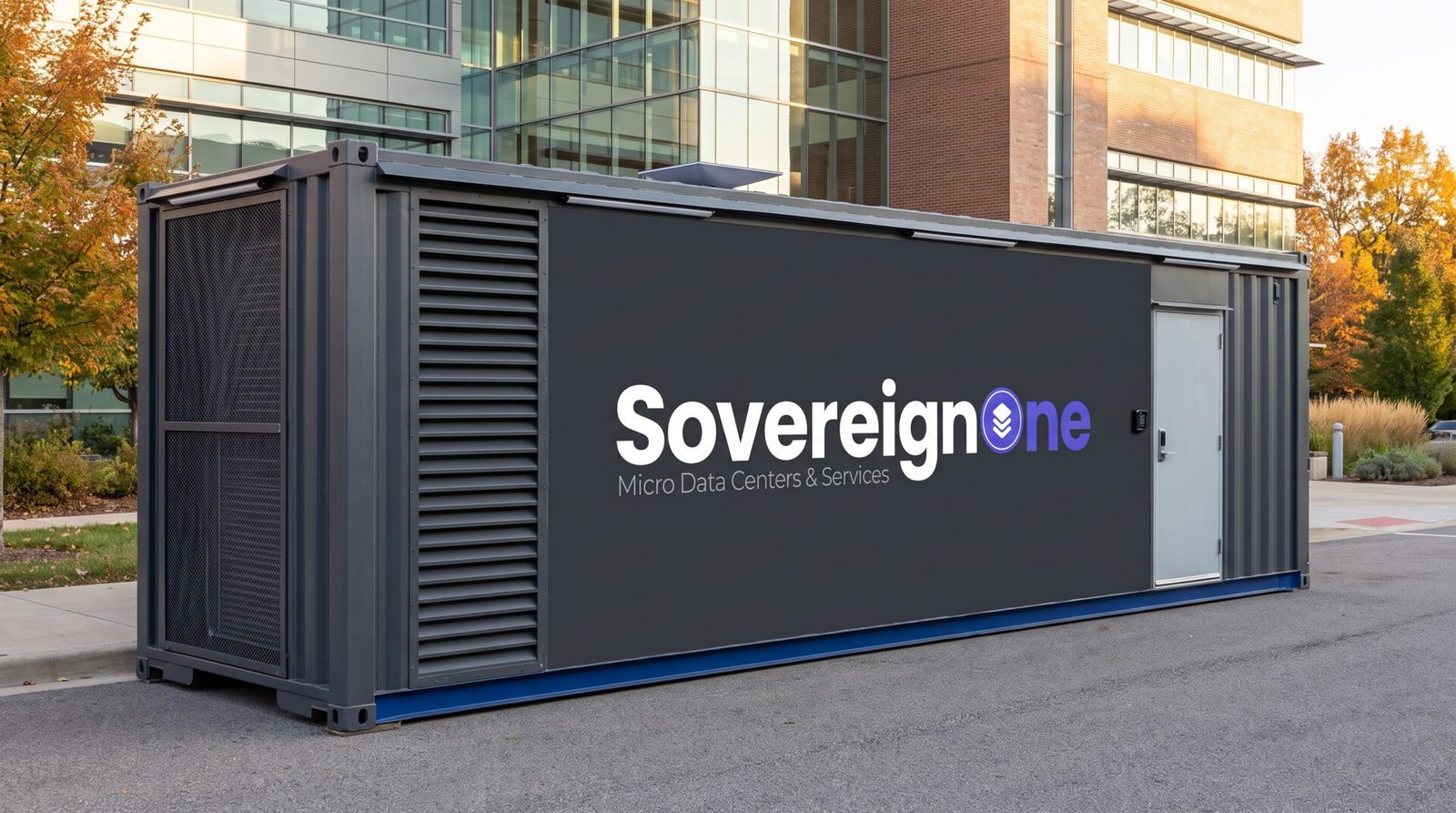
A SovereignOne modular data center on a university campus in autumn beside a research building
12
Budget and campus space

Grant-funded research needs capacity now, for the length of the award. A new campus facility is a capital project with a timeline no principal…

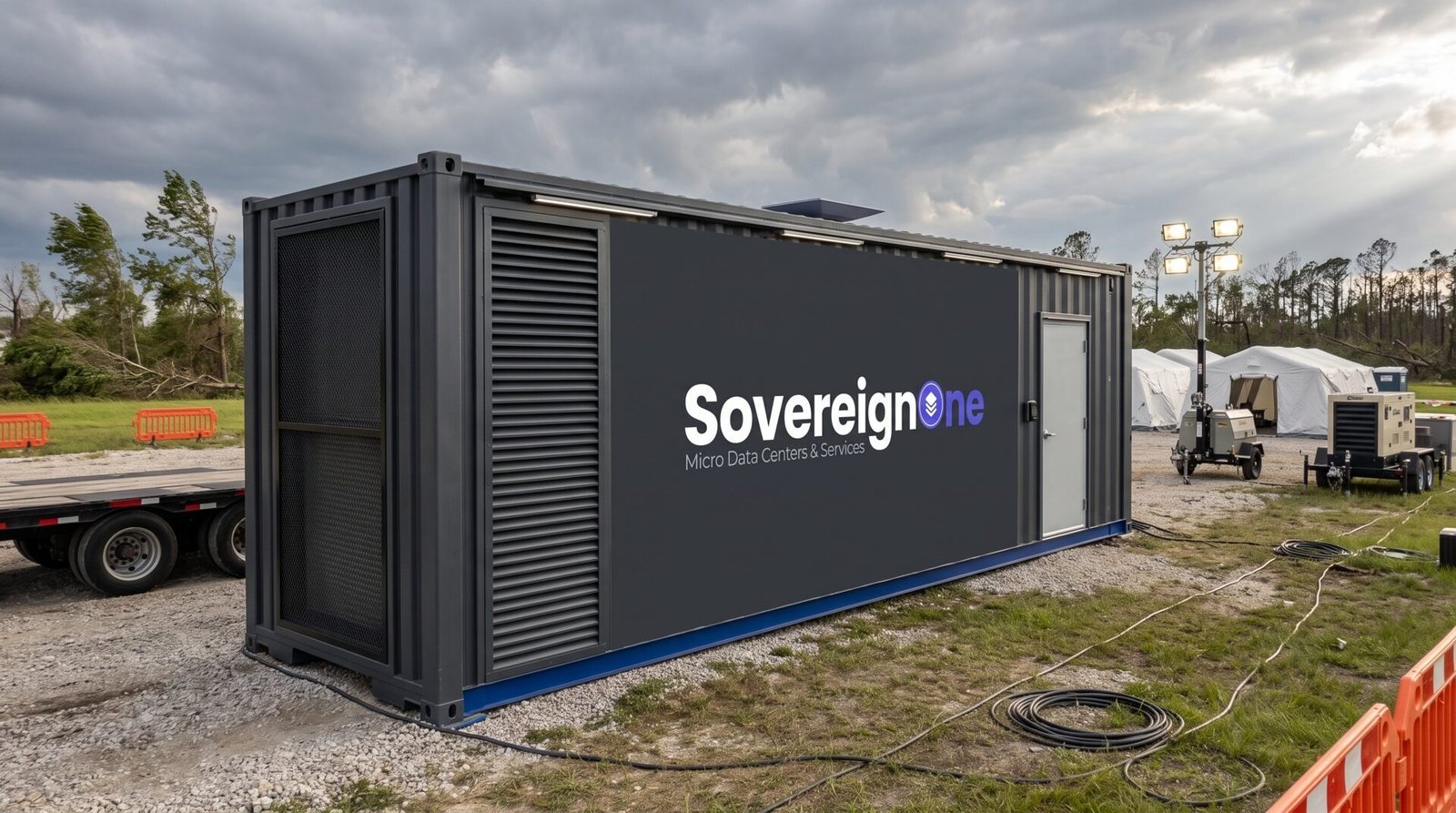
A SovereignOne modular data center at a storm-damage staging area with relief tents and light towers
13
No grid, no building, no time

In the days after an event, the infrastructure that would normally host the response is part of the damage. Compute has to arrive on a trailer, run…

Why an edge data center, across every sector

Industries differ in what they compute, not in why they need an edge data center. In every case the data is produced somewhere that was not designed around a server room, it is too large or too time-critical to move comfortably, and the site has power and ground before it has floor space.

The five lengths cover a wide range of deployments without changing the underlying design: 7 ft with a single rack at a nominal 125 kW, 12 ft with two racks at 250 kW, 20 ft with five racks at 625 kW, 40 ft with ten racks at 1.25 MW, and 52 ft with fourteen racks at 1.75 MW. Every length shares the same cooling, power and security design, so an engineering review completed for one deployment holds for the next.

Siting is a question of power and ground rather than construction. A conventional build runs two to five years from permit to energised; a SovereignOne edge data center runs four to six months from survey to live load, which is what makes the same approach workable across a mine, a hospital campus, a distribution centre and a cell cluster.

Cooling is where most of the saving sits. The design reduces power and water used for cooling by 30% against a conventional air-cooled hall. On constrained sites, available utility capacity rather than floor space is usually what limits a deployment, so that reduction often decides whether a site can host the load at all.

The sector pages that follow describe what changes between them: the workloads that justify an edge data center, the site conditions it has to tolerate, and the way capacity tends to grow once the first unit is in place. What stays constant is the unit itself, which is why an organisation operating across several of these sectors does not end up with several different architectures.

Capacity is added the same way it was installed. A second unit is specified against the same design, set beside the first and joined into one continuous white space, so growth stays a procurement decision rather than a new construction project.

Each unit is integrated from established platforms — CDW, Vertiv, Penguin Solutions, Motivair, Dell, Supermicro, Connected Power, NVIDIA — rather than bespoke hardware. SovereignOne is a Liberation Technology Services company, and Liberation Technology Services Inc. is a WEXMAC prime contract holder.

Common Questions

Questions about edge deployment.

Why deploy compute at the edge instead of in a central data center?

Because the constraint is rarely compute itself — it is distance, connectivity, power or permitting. Processing data where it is produced removes the dependency on a link back to a central facility.

Does the same unit serve very different sectors?

Yes. One platform covers compute that has to move with a mission, a hospital that cannot renovate a floor, a remote site with no dependable fibre, and a government that needs workloads to stay inside its own border. The siting and the workload change; the architecture does not.

My sector is not listed. Does that rule it out?

No. These pages describe typical deployments, not the limits of the platform. If the constraint is power, space, latency or control of your own data, the same unit applies.

Not listed, but the same problem?

If the capacity has to sit where the data is, the answer is usually the same shape. Send us the site and the load.